Introduction
In today’s digital world, having a strong online presence can help you build trust, attract opportunities, and establish yourself as an expert in your field. Whether you are a freelancer, business owner, creator, student, or professional, learning how to build a personal brand online can be valuable.
A personal brand is not simply a logo or a social media profile. It is the reputation people develop when they see your name, content, skills, and expertise online.
In this guide, you will learn practical steps to build a personal brand online in Pakistan in 2026.
What Is a Personal Brand?
A personal brand is the way people recognize and understand you based on your skills, knowledge, personality, content, and online activities.
For example, someone who regularly shares useful SEO tips may become known for SEO. Another person who posts technology tutorials may build a reputation as a technology expert.
Your goal should be to become recognizable for something useful.
If you want to build a personal brand online, start by choosing one clear area of expertise.
1.Choose Your Area of Expertise
The first step is deciding what you want to be known for.
Your area could be:
- SEO
- Digital marketing
- Technology
- Graphic design
- Business
- Education
- Fitness
- Photography
- Programming
- Content creation
Choose an area where you have knowledge or are willing to develop genuine expertise.
2.Define Your Target Audience
A strong personal brand needs a specific audience.
Ask yourself:
- Who do I want to help?
- What problems do they have?
- What information are they searching for?
- What can I teach them?
For example, instead of targeting everyone interested in technology, you could focus on beginners who want simple technology tutorials.
A clear audience makes your content much easier to plan.
3.Create a Professional Online Profile
Your online profiles should clearly communicate who you are and what you do.
Use a consistent:
- Name
- Profile photo
- Username
- Bio
- Professional description
Make sure visitors can understand your expertise within a few seconds.
If you have a website, include it in your social media profiles so people can learn more about your work.
4.Create Useful Content
Content is one of the most important parts of building a personal brand.
You can create:
- Blog posts
- Short videos
- Tutorials
- Social media posts
- Infographics
- Case studies
- Educational guides
Your content should solve problems, answer questions, or teach something useful.
Do not focus only on promoting yourself. Give people a reason to follow you.
5.Choose the Right Social Media Platforms
You do not need to be active on every platform.
Choose platforms where your target audience already spends time.
For example:
- LinkedIn can be useful for professional content.
- Instagram can work well for visual content.
- YouTube is useful for long-form and educational videos.
- TikTok can help creators reach new audiences.
- Facebook can be useful for communities and local audiences.
Start with one or two platforms and become consistent before expanding.
6.Be Consistent
Building a personal brand takes time.
You do not need to publish content every day. A realistic schedule is better than creating a large amount of content for a short period and then stopping.
For example, you could publish:
- Two social posts each week
- One useful article each week
- Two short videos each week
Choose a schedule you can maintain.Consistency is one of the most important factors when you build a personal brand online.
7.Share Your Knowledge and Experience
People connect with useful information and real experiences.
If you learn something valuable, explain it in a simple way.
You can share:
- Lessons you have learned
- Mistakes you made
- Useful tools
- Step-by-step tutorials
- Practical tips
- Case studies
This can help make your content more authentic and useful.
8.Build Trust With Your Audience
Trust is more valuable than having a large follower count.
Avoid making unrealistic income claims or presenting yourself as an expert in something you do not understand.
Instead:
- Provide accurate information.
- Admit when you do not know something.
- Give practical examples.
- Respond professionally.
- Correct mistakes when necessary.
Over time, consistency and honesty can strengthen your reputation.
9.Create a Personal Website
A website can act as your central online profile.
It can include:
- About page
- Services
- Blog
- Portfolio
- Contact page
- Social media profiles
A personal website also gives you more control over your online presence instead of relying entirely on social media platforms.
Internal link suggestion: Link the phrase “SEO” to your existing SEO article.
10.Use Your Personal Brand to Create Opportunities
Once people recognize your expertise, your personal brand can potentially create different opportunities.
These may include:
- Freelance clients
- Business leads
- Speaking opportunities
- Sponsorships
- Consulting
- Digital products
- Partnerships
- Job opportunities
However, these opportunities normally come after you have built credibility and an audience.
Common Personal Branding Mistakes
Avoid these common mistakes:
Changing Your Topic Constantly
If you discuss completely different topics every day, it can be difficult for people to understand what you are known for.
Copying Other Creators
Use other creators for inspiration, but develop your own perspective and presentation.
Focusing Only on Followers
A smaller audience that trusts your expertise can be more valuable than a large audience that does not engage with your content.
Making Unrealistic Claims
Avoid promises such as guaranteed income or instant success. Build your reputation around useful and honest information.
How Long Does It Take to Build a Personal Brand?
There is no fixed timeline.
Some people may begin receiving opportunities within months, while others may need much longer.
Your results can depend on:
- Content quality
- Consistency
- Niche
- Audience
- Communication skills
- Platform
- Networking
- Experience
The goal should be long-term credibility rather than overnight popularity.
Final Thoughts
Learning how to build a personal brand online can be a valuable investment in your future. A strong personal brand can help people understand your expertise, discover your work, and trust your recommendations.
Start with one area of expertise, identify your audience, create useful content, maintain consistent profiles, and gradually build your online reputation.
You do not need thousands of followers to begin. Start with useful content and focus on helping the people who find it.
Internal Link Suggestions
- Anchor text: SEO → your existing SEO article.
- Anchor text: YouTube → your new YouTube article.
- Anchor text: online earning → your existing online earning article.
External Link
Use the official Google Search Central documentation for the phrase “Google Search” when discussing your website’s search visibility.
External URL:
“https://developers.google.com/search”
Featured Image Prompt
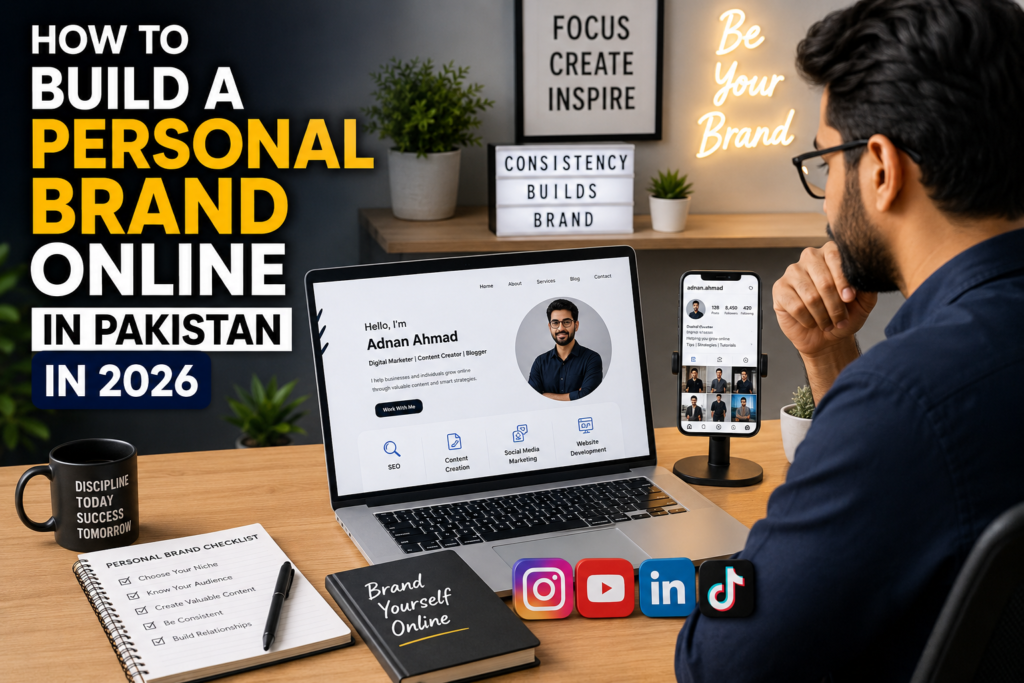
A professional Pakistani digital creator building a personal brand from a modern home office, laptop showing a personal website and social media profiles, smartphone displaying social media content, microphone and notebook on desk, modern realistic photography, clean professional workspace, high-quality SEO blog featured image.
Image Alt Text
Build a personal brand online in Pakistan in 2026
Suggested Category
Digital Marketing
Anyone can build a personal brand online by consistently sharing useful and trustworthy content.