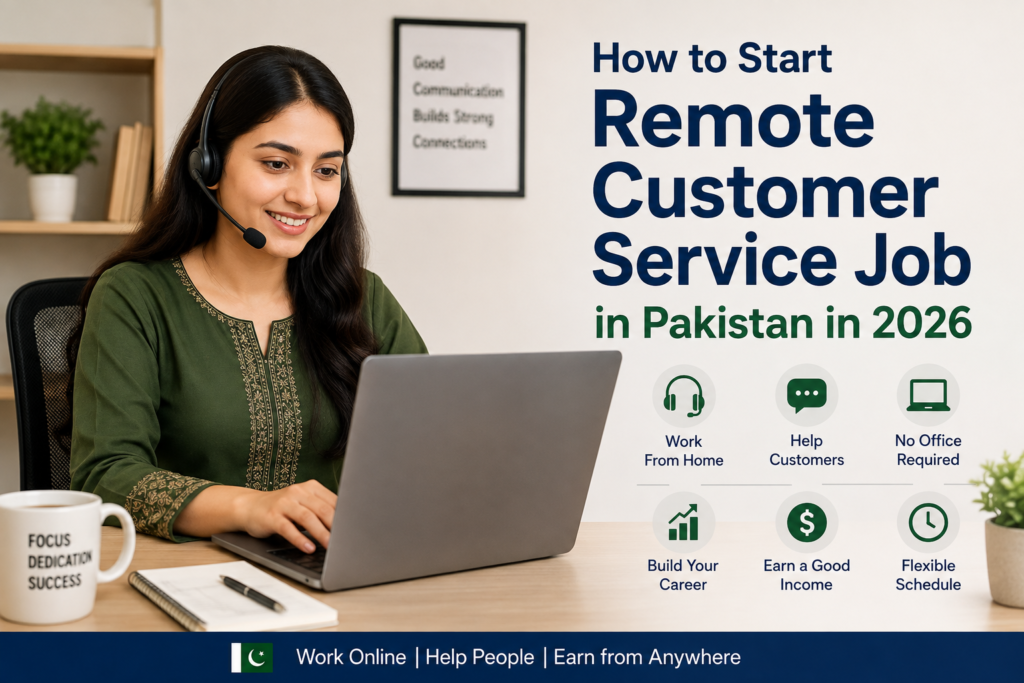
Introduction: Remote Work Is No Longer a Side Option
A few years ago, working from home in Pakistan felt like a rare privilege. In 2026, it is a normal career path. Pakistani companies, startups, and international employers now hire remote workers for customer support, design, writing, data work, and software roles — and many of these jobs do not require a university degree, only real skills and reliable internet.
But there is a catch: for every genuine remote job, there are several scams promising easy money for little work. This guide separates the real opportunities from the traps, shows you where to look, and walks you through applying step by step.
What Counts as a Remote Job?
A remote job is a regular, salaried or contract position that you do from home, rather than freelance project work. Unlike freelancing, where you find your own clients, a remote job usually means:
- A fixed monthly salary or hourly rate
- Set working hours, often in a specific time zone
- A proper hiring process: application, interview, and sometimes a skills test
- Ongoing work with one employer, not one-off gigs
That stability is exactly why remote jobs appeal to so many Pakistanis — especially students, parents, and people outside the big cities who cannot commute to an office every day.
The Best Remote Job Types for Pakistanis in 2026
1. Customer Support and Chat Support
Companies need people to answer customer questions by chat, email, and phone. Good written English and patience matter more than technical knowledge. Many support roles offer evening or night shifts, which suit Pakistani time zones for international clients.
2. Virtual Assistance
Virtual assistants handle emails, scheduling, research, and admin tasks for busy business owners. If you are organised and good at communication, this is one of the easiest remote roles to enter. Read our full guide on how to become a virtual assistant in Pakistan to see the exact skills and rates.
3. Content Writing and Editing
Blogs, businesses, and e-commerce stores constantly need articles, product descriptions, and social media captions. If you can write clear English, this is a realistic entry point — and your own portfolio of published work becomes your best CV.
4. Data Entry and Back-Office Work
Data entry, bookkeeping support, and CRM updating remain in demand. These roles suit beginners, but be careful: genuine employers never charge you a “registration fee” to start (more on scams below).
5. Design, Video Editing, and Social Media Management
If you know Canva, video editing, or social media tools, small businesses will pay for ongoing help. These roles often start part-time and grow into full-time positions once you prove yourself.
6. Tech Support and Junior Tech Roles
Basic IT support, QA testing, and junior development roles are increasingly remote. A short practical course plus a small portfolio can be enough to land a first role.
Where to Find Legit Remote Jobs in Pakistan
Do not rely on random WhatsApp forwards. Use these trusted sources:
- LinkedIn: Filter jobs by “Remote” and location “Pakistan”. Follow companies you want to work for and turn on job alerts.
- Rozee.pk and Mustakbil.com: Pakistan’s established job portals, with growing remote listings.
- Indeed Pakistan: Search “remote” plus your skill, and check the employer’s website before applying.
- Remote job boards: Sites like Remote.co, We Work Remotely, and FlexJobs list international remote roles. Some are competitive, but they are legitimate.
- Company career pages: If you admire a company, check its own careers page directly. Many remote roles are posted there first.
A smart habit: apply to a mix of Pakistani remote employers and international ones. Local companies may pay less but offer easier interviews; international roles often pay more but expect stronger English and a skills test.
The Skills Employers Actually Check
Remote employers care less about certificates and more about proof that you can do the work. Focus on:
- Communication: Clear emails, good spoken English, and fast, polite replies.
- Reliability: Showing up on time, meeting deadlines, and reporting problems early.
- Tools: Google Workspace, Zoom, Slack, Trello or Asana, and the tools of your specific role.
- A small portfolio: Two or three sample projects beat a long CV. Writers can show articles, designers can show mock designs, and support staff can show sample replies.
If you are starting from zero, pick one skill, practise for 30 days, and build three samples. That alone puts you ahead of most applicants.
How to Apply for Remote Jobs: A Step-by-Step Plan
- Choose one role and tailor your CV to it. A CV that tries to cover everything convinces nobody.
- Write a short, specific cover note. Mention the role, one relevant skill, and one result or sample. Avoid copy-paste cover letters.
- Prepare for a video interview. Test your camera, microphone, and internet beforehand, and keep your background tidy.
- Expect a skills test. Many employers ask for a short task — a sample email, a design, or a data task. Take it seriously; it often decides the hire.
- Follow up once. A polite follow-up email after a week is professional. Do not message daily.
- Apply consistently. Aim for 5–10 quality applications a week rather than 50 rushed ones.
If you want to build income while you search, freelancing platforms can also help. Our guide to getting your first client on Upwork explains how to win early work and build proof of your skills.
Realistic Salary Expectations
Be honest with yourself here. Entry-level remote roles in Pakistan commonly start in the range of PKR 50,000 to 150,000 per month, depending on the role, your English, and whether the employer is local or international. Experienced specialists — designers, developers, and senior support staff — can earn significantly more, but that takes time and a track record.
Any job ad promising PKR 300,000 a month for two hours of daily work with no skills required is not a job. It is a scam, and the next section explains how to spot one.
How to Spot a Remote Job Scam
Watch for these red flags and walk away if you see even one:
- They ask you to pay a registration, training, or equipment fee before you start.
- They contact you on WhatsApp only with no company website, LinkedIn page, or verifiable email address.
- The pay is absurdly high for simple work, and the “interview” is just a few chat messages.
- They ask for your bank details, CNIC photo, or passwords before any formal offer.
- They pressure you to decide today or the “offer expires”.
Real employers interview you properly, send a written offer, and never charge you to work for them. When in doubt, search the company name plus the word “scam” and check whether the company exists on LinkedIn and its official website.
Setting Up to Work From Home
You do not need an expensive setup, but you do need the basics: a reliable laptop, a stable internet connection, a backup option (such as mobile data) for load-shedding, and a quiet corner where you can take calls. A headset with a microphone makes a big difference in interviews and support work.
Also, protect your routine. Remote work gives freedom, but it also blurs the line between work and rest. Set working hours, take breaks, and keep a simple daily to-do list — employers notice consistent, organised workers fast.
Frequently Asked Questions
Do I need a degree for a remote job in Pakistan?
Not always. Many support, VA, writing, and design roles value skills and samples over degrees. Tech roles may prefer a degree, but a strong portfolio can still open doors.
Can students apply for remote jobs?
Yes, especially for part-time and evening roles. Be honest about your availability in your application so the employer can plan around your classes.
How long does it take to get hired?
It varies widely. Some people land a role within a month; for others it takes three to six months of steady applications. Consistent applications and a growing portfolio shorten the wait.
Should I pay for a remote job course?
Only if the course teaches a real, verifiable skill and you can check honest reviews. Never pay a “job placement fee” to a company that promises a guaranteed job.
Is it better to freelance or take a remote job?
A remote job gives stable income and structure; freelancing gives freedom and potentially higher earnings later. Many Pakistanis start with a remote job for stability and freelance on the side — a sensible combination.
Premium Digital Products
If you are preparing for remote work, these ready-made resources can speed up your setup:
- Freelancer Business Kit ($14.99)
- Ultimate Planner Bundle 2026 ($24.99)
- AI Prompt Mega Bundle ($29.99)
Conclusion: Start With One Role and One Skill
Remote jobs in Pakistan in 2026 are real, growing, and reachable — but they reward preparation, not luck. Pick one role from this guide, build three samples, and apply steadily to genuine employers. Avoid anyone who charges you to work, protect your personal information, and give yourself a few months of consistent effort. Your first remote job may be the step that changes how you work for good.
Follow Us
- YouTube: AI Tool Hunter
- TikTok: @aitoolhunter2
- Facebook: AI Tool Hunter