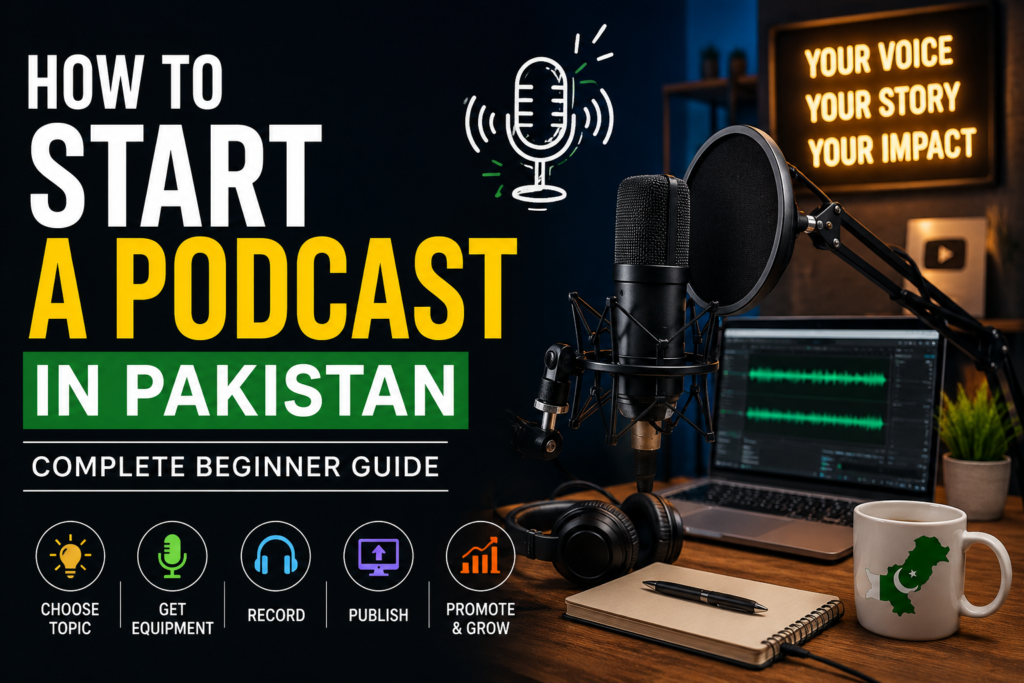
How to Start a Podcast and Earn Money in Pakistan in 2026
You do not need a studio, a famous name, or expensive equipment to start a podcast in Pakistan. All you need is a clear topic, a decent microphone, and the discipline to publish regularly. Podcasting is growing fast in Pakistan because listeners can learn, laugh, and stay informed while commuting, working, or doing household chores — and that attention is exactly what sponsors and advertisers pay for.
This guide walks you through starting a podcast from scratch in Pakistan in 2026, from choosing a topic to earning your first income from it. No hype, no overnight promises — just a realistic path.
Why Podcasting Works in Pakistan in 2026
Audio content has a big advantage over video: it is cheaper to produce and easier for audiences to consume. A listener in Karachi, Lahore, or Islamabad can follow your show during a long commute without staring at a screen. At the same time, platforms like Spotify, Apple Podcasts, and YouTube have made distribution almost free, so a creator in Pakistan can reach listeners in the UK, USA, and the Gulf without spending anything on distribution.
Another reason podcasting works is trust. People spend 20 to 40 minutes with a podcast host, far longer than with a short video. That long attention builds a loyal audience, and a loyal audience is what turns into sponsorships, course sales, and freelance clients over time.
Step 1: Choose a Topic and Format
The biggest mistake new podcasters make is trying to talk about everything. Pick one clear topic you can talk about for at least 50 episodes. Good podcast niches in Pakistan include freelancing and online earning, business stories, cricket, Islamic finance, tech news, education, and personal development.
Next, choose a format and stick with it:
- Solo show: You speak directly to the audience. Simple to produce and easy to schedule.
- Interview show: You invite guests. Great for growth, because guests share the episode with their own audience.
- Co-hosted show: You and a friend discuss a topic. More energy, but harder to schedule.
- Storytelling show: You narrate stories or explain a topic in depth. Works well for history, true crime, and business case studies.
Decide on an episode length too. For beginners, 20 to 30 minutes is ideal — long enough to deliver value, short enough to edit without burning out.
Step 2: Get Equipment That Fits Your Budget
You do not need professional gear to sound good. Here is a realistic budget setup for Pakistan:
- Microphone: A USB microphone such as a Fifine or Samson model costs around Rs. 8,000 to Rs. 20,000 and sounds far better than a phone mic. If your budget is very tight, start with your phone’s earphones mic and upgrade after ten episodes.
- Headphones: Any closed-back headphones will do for monitoring your voice while recording.
- Recording space: Record in a small, quiet room with curtains, a carpet, or a cupboard full of clothes nearby. Soft surfaces reduce echo better than expensive foam panels.
- Software: Audacity is free and does everything a beginner needs — recording, cutting mistakes, and removing background noise. CapCut or Audacity’s noise reduction can clean up fan noise and street sounds.
Spend your first money on the microphone, not on a logo or a website. Listeners forgive an average logo; they do not forgive bad audio.
Step 3: Record and Edit Your First Episode
Write a short outline before you press record: a hook for the first 30 seconds, three main points, and a closing call to action. Recording from an outline sounds natural, while reading a full script often sounds stiff.
Record in a quiet room, keep the microphone about 15 centimetres from your mouth, and speak slightly slower than you think you should. After recording, edit out long pauses, mistakes, and background noise, then add a short intro and outro. Aim for a clean, consistent volume — listeners should not have to adjust their volume mid-episode.
A simple intro formula works well: who you are, what the show is about, and what the listener will learn in this episode. End every episode by asking listeners to follow the show and share it with one person who would enjoy it.
Step 4: Publish on Spotify, Apple Podcasts, and YouTube
You only need to upload your episode once. A free or low-cost podcast host such as Spotify for Podcasters, Buzzsprout, or Podbean distributes your show to Spotify, Apple Podcasts, Google Podcasts, and other apps automatically.
Do not ignore YouTube. Many Pakistani listeners discover podcasts on YouTube first, so upload your episode there too — either as a simple audio video with a static image or, later, as a recorded video version. If you already run a channel, this is an easy way to reuse your content. For a video-first approach, read our guide on how to start a faceless YouTube channel in Pakistan.
Write a clear episode title and description for every episode, using the words people actually search for — for example, “How to Get Your First Client on Fiverr” will be found far more easily than “Episode 7: Chit Chat”. Good titles are a free source of new listeners.
How Podcasters in Pakistan Actually Earn Money
Podcasting income is real, but it grows slowly. Here are the realistic ways Pakistani podcasters earn, in the order most creators reach them:
- Sponsorships and brand mentions: Once you have a few thousand regular listeners, small businesses will pay to be mentioned in an episode. Rates depend on your audience size and niche, not on your follower count alone.
- Advertisements: Spotify and YouTube place ads on your episodes and share revenue with you once you meet their requirements. Income per thousand listens is modest, so this works best once your audience is large.
- Affiliate marketing: Recommend a tool, book, or course you genuinely use and earn a commission when listeners buy through your link. This is one of the earliest income sources for small shows. Our beginner’s guide to affiliate marketing in Pakistan explains how to start.
- Listener support: Platforms like Patreon, Buy Me a Coffee, and JazzCash or bank transfer tips let loyal listeners support the show directly.
- Your own products and services: A podcast builds authority. Many creators earn more from the coaching, courses, freelance clients, or digital products their podcast brings in than from ads. If you sell digital products, our guide on selling digital products on Gumroad from Pakistan is a good starting point.
Be honest with yourself about timelines: most podcasts earn little in the first three to six months. The creators who earn are the ones who publish consistently for a year while improving one thing in every episode.
How to Grow Your Audience Without a Big Budget
- Publish on a fixed schedule, ideally once a week, so listeners know when to expect you.
- Turn each episode into short clips for TikTok, Instagram Reels, and YouTube Shorts. One strong 30-second clip can bring in more listeners than a week of posting links.
- Invite guests with their own audiences, especially in your first 20 episodes.
- Ask a simple question at the end of each episode and read the best answers in the next one — it turns listeners into a community.
- Appear as a guest on other small podcasts in your niche before asking bigger shows to host you.
Common Mistakes Beginners Should Avoid
- Buying expensive equipment before publishing ten episodes.
- Changing topics every week instead of building authority in one niche.
- Recording without an outline and publishing rambling, hour-long episodes.
- Quitting after five episodes because growth is slow — podcasting rewards patience more than almost any other format.
- Copying another creator’s show format word for word. Take inspiration from successful shows, but build your own voice and examples.
Frequently Asked Questions
How much does it cost to start a podcast in Pakistan?
You can start for free using your phone and Spotify for Podcasters. A sensible beginner setup with a USB microphone costs roughly Rs. 10,000 to Rs. 25,000. Hosting is free on several platforms until your audience grows.
Do I need to show my face to run a podcast?
No. Audio-only podcasting is completely faceless, which is one reason it suits creators who are shy on camera. If you later add a video version on YouTube, you can still use slides, screen recordings, or stock visuals instead of your face.
How long does it take to earn money from a podcast?
For most beginners, the first small income — usually from affiliate links or a small sponsorship — arrives after three to six months of consistent weekly episodes. Full-time income typically takes one to two years and a loyal audience of several thousand listeners.
Can I run a podcast in Urdu, Roman Urdu, or English?
Yes, and each language reaches a different audience. Urdu and Roman Urdu podcasts connect deeply with Pakistani listeners, while English podcasts can attract an international audience and higher-paying sponsors. Choose the language you speak most naturally.
Do I need a license or registration to start a podcast in Pakistan?
No special license is required to start a podcast. If you later earn significant income from it, you should declare it like any other freelance income — our guide to the 0.25% freelancer tax in Pakistan explains the basics.
Conclusion
Starting a podcast in Pakistan in 2026 is one of the lowest-cost ways to build an audience and an income online. Pick one topic, buy a decent microphone, publish weekly, and give your show at least six months before judging it. Your first ten episodes will not be perfect — publish them anyway, because episode 50 is built on the lessons of episode one.
If this guide helped you, share it with a friend who keeps saying they want to start a podcast. Then record your first episode this week — your future audience is waiting.
Premium Digital Products
Want to grow faster as a creator? These digital products can help you plan content, write better prompts, and grow your audience:
- Content Creator Planner 2026 ($12.99)
- 100 Viral Content Prompts ($9.99)
- Creator Growth Bundle ($19.99)
Follow Us
- YouTube: https://youtube.com/@aitoolhunter-l3x (AI Tool Hunter)
- TikTok: https://www.tiktok.com/@aitoolhunter2
- Facebook: https://www.facebook.com/share/1BSSJwLtas/ (AI Tool Hunter)